

Introduction: When Numbers Start to Carry Emotional Weight
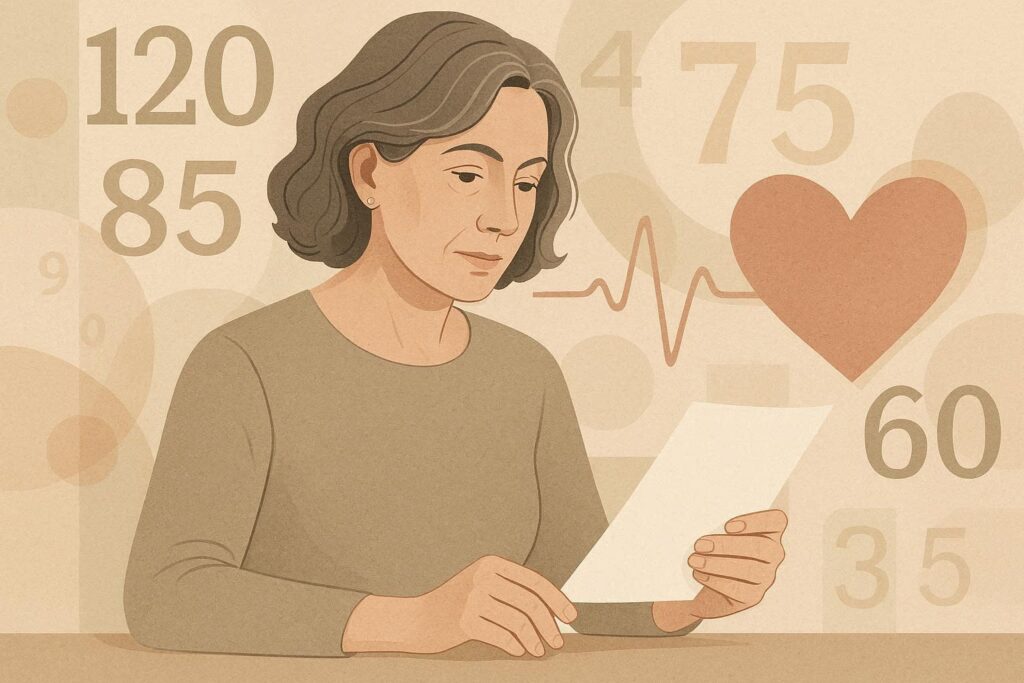
For many women, the most stressful part of a medical appointment isn’t a symptom—it’s the moment the numbers appear.
Blood pressure readings. Cholesterol panels. LDL, HDL, triglycerides. Ratios circled in red. A quiet pause before a clinician says, “We should keep an eye on this.”
Often, these numbers arrive without context. No explanation of why they changed. No acknowledgment of menopause, stress, sleep loss, or muscle decline. Just an implied message: something is drifting in the wrong direction.
What follows is familiar. Anxiety. Late-night searching. Conflicting advice. A sense that the body is suddenly on probation.
But cardiovascular numbers are not verdicts. They are signals, shaped by biology, environment, and timing—especially in women.
Understanding blood pressure and cholesterol levels for women requires more than knowing what is “normal.” It requires knowing how female physiology changes after 40, and how to interpret numbers as part of a moving system rather than a static judgment.
Core Concept Explanation
What Blood Pressure and Cholesterol Actually Measure
Blood pressure and cholesterol are often discussed together, but they reflect different aspects of cardiovascular health.
Blood pressure measures the force of blood against artery walls. It reflects:
- Vascular flexibility
- Nervous system tone
- Fluid balance
- Stress and hormonal signaling
Cholesterol levels measure how fats are transported in the blood. They reflect:
- Liver metabolism
- Hormonal regulation
- Inflammatory activity
- Energy storage and usage
Neither tells a complete story on its own. Together, they offer a snapshot—not a destiny.
Why Female Physiology Changes the Equation
Much of what we consider “normal” cardiovascular ranges was derived from male-dominant data sets. Women’s numbers often shift differently, especially around menopause.
Estrogen influences:
- Arterial elasticity
- LDL receptor activity
- HDL production
- Inflammatory balance
As estrogen declines, cardiovascular markers often change—not because health suddenly deteriorates, but because the regulatory environment shifts.
Why This Becomes Especially Relevant After 40
Biological Factors
After 40, and particularly during perimenopause and menopause, women experience:
- Reduced arterial compliance (vessels stiffen slightly)
- Changes in lipid metabolism
- Increased sensitivity to sodium and stress
- Altered insulin signaling
These changes can raise blood pressure modestly and shift cholesterol patterns—even in women with unchanged lifestyles.
Importantly, these shifts are often gradual, which makes them easier to overlook and harder to contextualize.
Lifestyle Factors
Midlife often brings:
- Chronic time pressure
- Reduced sleep
- Less recovery between stressors
- Lower spontaneous movement
Each of these independently affects blood pressure and lipid metabolism. Together, they compound.
Stress, Hormones & Recovery Factors
Chronic stress elevates sympathetic nervous system tone, which:
- Raises resting blood pressure
- Alters cholesterol transport
- Increases inflammatory signaling
Sleep disruption further amplifies these effects, particularly in women whose hormonal buffering is already changing.
What’s Considered “Normal” — And Why That Word Can Be Misleading
Blood Pressure in Women
Traditional categories:
- Normal: <120/80
- Elevated: 120–129 / <80
- Hypertension: ≥130/80
For women, interpretation should also consider:
- Age
- Menopause status
- Stress load
- Measurement conditions
A single elevated reading is not a diagnosis. Trends matter more than moments.
Cholesterol Levels in Women
Standard markers include:
- Total cholesterol
- LDL (“bad” cholesterol)
- HDL (“good” cholesterol)
- Triglycerides
But numbers must be interpreted in relationship, not isolation. For example:
- Higher LDL with high HDL may carry different meaning than LDL alone
- Triglycerides are strongly influenced by stress and sleep
- Ratios often matter more than totals
When Numbers May Deserve Attention
Closer attention is warranted when:
- Blood pressure rises consistently over time
- Cholesterol changes rapidly without explanation
- Multiple markers shift together
- Symptoms like fatigue or breathlessness accompany changes
This is not about panic—it’s about pattern recognition.
What Research Suggests Actually Helps
Contextual Interpretation
Research increasingly emphasizes global risk context over single thresholds. Age, inflammation, metabolic health, and lifestyle all modify risk.
Muscle as a Cardiovascular Ally
Preserving muscle mass improves:
- Insulin sensitivity
- Blood pressure regulation
- Lipid metabolism
This is especially important for women after 40.
Stress Reduction as Physiology, Not Luxury
Lowering chronic stress measurably improves blood pressure and lipid profiles—not because stress is “bad,” but because it directly affects vascular tone and liver metabolism.
Sleep Consistency
Sleep stabilizes:
- Cortisol rhythms
- Blood pressure overnight
- Lipid transport pathways
Poor sleep can distort numbers independent of diet or exercise.
Common Misconceptions
“My numbers mean I’m unhealthy.”
Numbers reflect context, not character.
“Medication is inevitable.”
Not always—especially early.
“Lower is always better.”
Extremes can carry risk.
“If I feel fine, numbers don’t matter.”
Silent changes still deserve understanding.
Long-Term Perspective
Blood pressure and cholesterol levels in women are dynamic markers, not fixed labels. They respond to environment, hormones, stress, and recovery.
Understanding them as feedback—not judgment—allows women to engage proactively rather than reactively.
Frequently Asked Questions
Why did my cholesterol change during menopause?
Hormonal shifts alter lipid metabolism and receptor activity.
Can stress raise cholesterol?
Yes—through cortisol-driven liver signaling.
Is high HDL always protective?
Usually, but context matters.
Do numbers fluctuate month to month?
They can, especially during hormonal transition.
Should women track trends instead of single results?
Yes. Trends provide far more insight.
Final Perspective
For women, cardiovascular numbers often become meaningful at the same time life becomes more complex. The goal is not perfection—it is interpretation with wisdom.
Numbers are messages, not verdicts. When understood in context, they empower rather than intimidate.
Editorial Disclaimer
This article is for educational purposes only. It does not diagnose, treat, or replace professional medical care. Readers should consult qualified healthcare providers regarding cardiovascular concerns.